
EDI Integration
EDI Integration Services for X12 and EDIFACT Trading Partners
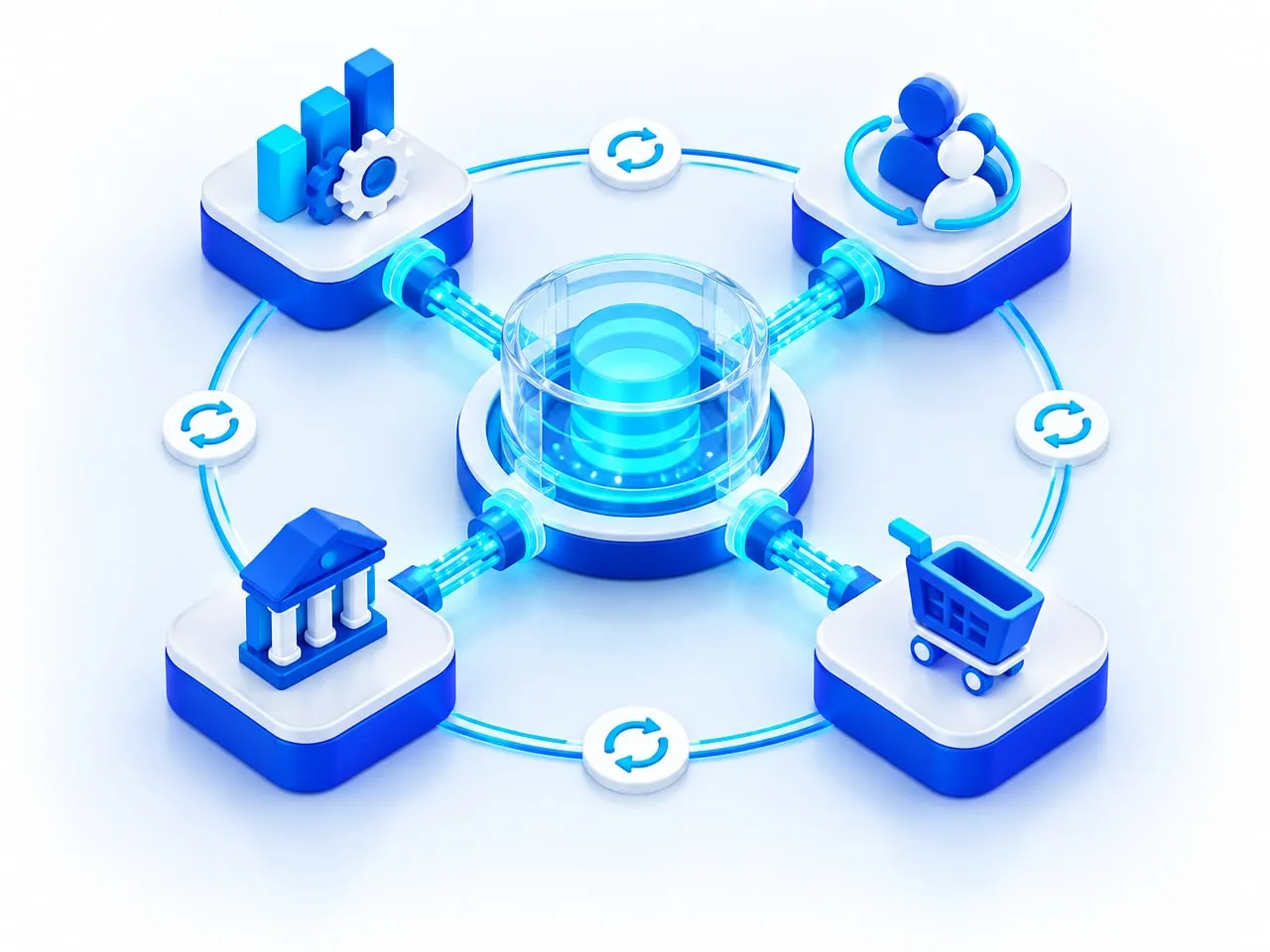
EDI integration connects your systems with your trading partners' systems through standard electronic documents instead of email, spreadsheets and portals. In logistics that means load tenders, shipment status updates, advance ship notices and freight invoices flowing automatically between shippers, carriers, 3PLs and customers. North American partners mostly use ANSI X12, such as the 204, 214, 856 and 810. European and Gulf partners often use UN/EDIFACT, such as IFTMIN, IFTSTA, DESADV and INVOIC. MultiGenesys builds the translation, mapping, transport and monitoring between those documents and your TMS, WMS or ERP, so onboarding a new partner is a mapping exercise rather than a project.
Outcomes
What you get
Partners onboarded faster
A reusable mapping layer means a new customer or carrier needs new maps and tests, not new code, so you can say yes to partners who require EDI.
No more re-keying tenders and statuses
Load tenders arrive in your TMS, and status updates, ship notices and invoices leave it, without someone copying data between screens and emails.
Every document accounted for
Functional acknowledgements, retries and a message dashboard show what was sent, received, accepted or rejected, and why.
Fewer chargebacks and disputes
Accurate ship notices and timely status messages help you meet retailer and shipper compliance rules that often carry penalties when missed.
What’s included
EDI Integration, end to end
X12 transportation and supply-chain sets
204 load tender, 990 tender response, 214 shipment status, 210 freight invoice, 850 purchase order, 856 advance ship notice, 810 invoice and 997 or 999 acknowledgements.
UN/EDIFACT messages
IFTMIN transport instructions, IFTSTA status, DESADV despatch advice, ORDERS, INVOIC and CONTRL acknowledgements for European, Gulf and global partners.
Transport and security
AS2 with certificates and signed receipts, SFTP and VAN connections, and partner-specific schedules, folders and encryption.
Mapping and validation layer
Maps between EDI documents and your internal JSON or database model, with validation against each partner's implementation guide before anything is sent.
TMS, WMS and ERP connectors
EDI flows connected to your transport, warehouse and ERP systems through APIs, queues or database integration, including SAP, Oracle, TallyPrime and Zoho.
API alternatives for modern partners
REST and webhook endpoints alongside EDI, so newer partners and platforms can exchange the same data without a translator.
Monitoring, replay and partner testing
A dashboard of every interchange, alerts on rejected or missing documents, replay after fixes, and a test harness for partner certification.
Process
How an EDI Integration engagement runs
Clear stages, working software at every step, and the same team from first workshop to production support.
- 01
Step 1
Inventory partners and documents
We list your trading partners, document types, standards, versions, transports and the systems each flow touches.
- 02
Step 2
Design the canonical model
We define one internal model for tenders, shipments, ship notices and invoices, so each partner maps to it once.
- 03
Step 3
Build and certify the first partner
We connect your highest-volume partner end to end and complete their test and certification cycle.
- 04
Step 4
Onboard partners in waves
We add partners by mapping and testing, reusing transport, validation and monitoring.
- 05
Step 5
Run and support
We monitor interchanges, handle partner changes and new versions, and keep mapping documentation current.
Why MultiGenesys for EDI Integration
EDI is old, and it is not going away. Large shippers, retailers and carriers in North America still tender loads with the X12 204 and expect 214 status messages back on time. European and Gulf partners send EDIFACT instructions and despatch advices. For a growing logistics provider, the question is rarely whether to do EDI, but how to stop each new partner from becoming its own integration project.
Our answer is a canonical model. We define one internal representation of a load tender, a shipment status, a ship notice and an invoice, and map every partner’s documents to and from it. Transport, AS2 certificates or SFTP schedules, validation, acknowledgements and monitoring are shared. A new partner then means new maps and a test cycle, not new code. When a partner wants REST APIs or webhooks instead, they use the same model.
Reliability matters more than format. Every interchange is logged with its control numbers, functional acknowledgements are tracked, rejected documents raise alerts with the reason, and corrected documents can be replayed. That is the same queue-based, idempotent and reconciled approach our system integration and accounting system integration work uses, where our team runs 15+ accounting and ERP connectors with typical connector go-live in 2 to 3 weeks for standard accounting flows. EDI partner timelines depend more on each partner’s certification process.
Freight invoices are where EDI and documents meet. Partners who send 210 or INVOIC messages post automatically. For those who still send PDFs and scans, our intelligent document processing pipelines read invoices, bills of lading and delivery notes into the same model. Where invoices also fall under e-invoicing mandates, such as ZATCA in Saudi Arabia, UAE e-invoicing, InvoiceNow in Singapore or Peppol in Europe and Australia, we connect those flows too.
See the logistics industry page for telematics, warehouse and proof-of-delivery work.
Technologies we use
- ANSI X12
- UN/EDIFACT
- AS2
- SFTP
- Java / Spring Boot
- Apache Camel
- Node.js
- Apache Kafka
- RabbitMQ
- PostgreSQL
- REST / webhooks
- SAP / Oracle / TallyPrime / Zoho
- Docker / Kubernetes
- Grafana
Engagement models
Work with us the way that suits you
Dedicated product team
A stable, cross-functional team — engineers, design, QA, DevOps — that owns your roadmap quarter after quarter.
Fixed-scope delivery
A defined build with milestones, demos and a hard definition of done.
Embedded engineers
Senior engineers inside your team, in your tools and your stand-ups, with no hand-over boundary.
Working standards
What you can expect on every project
Reviewed, version-controlled code
Every change goes through pull requests and peer review in your repository, with a clean history you own.
Automated testing in CI/CD
Unit, integration and API tests run in the pipeline on every change, so regressions are caught before release.
Security by default
Least-privilege access, secrets management, OWASP-aligned checks and environment separation from day one.
Production-ready by default
Idempotent APIs, audit trails, monitoring, alerting, backups and documented runbooks ship with every platform.
Frequently asked questions
Still unsure? Ask us directly — we reply within one business day.
What is EDI integration?
EDI integration is the automated exchange of business documents, such as orders, load tenders, ship notices and invoices, between trading partners in a standard format, connected directly to each side's business systems. It replaces email, portals and re-keying with machine-readable messages and acknowledgements.
What do the X12 204, 214 and 856 transactions do?
The 204 is a motor carrier load tender, sent by a shipper to offer a load to a carrier, and the 990 is the carrier's response. The 214 carries shipment status updates such as pickup, in transit and delivered. The 856 is the advance ship notice that tells the receiver what is in a shipment and how it is packed.
Do we need X12 or EDIFACT?
It depends on your partners. North American retailers, shippers and carriers mostly use ANSI X12. European partners and many in the Gulf and Asia use UN/EDIFACT, and some large partners publish their own variants. Many logistics providers need both, which is why we map both to one internal model.
Can you connect EDI to our existing TMS, WMS or ERP?
Yes. We connect through the system's API, message queues, database tables or file interfaces, depending on what it supports and what your IT team approves. Inbound tenders and orders create records in your system, and outbound statuses, ship notices and invoices are generated from it.
How long does it take to onboard a new trading partner?
Once the mapping layer and transport are in place, a new partner mainly needs maps for their documents, connection setup and their test cycle. The partner's own testing schedule is often the longest part. We agree a plan per partner after reviewing their implementation guide.
Should we use EDI or APIs?
Use whichever your partner requires. Large retailers, shippers and carriers often mandate EDI. Newer platforms prefer REST APIs and webhooks. We build both on the same internal model, so the business logic is written once and each partner gets the format they need.
Related services
Accounting System Integration
Connectors for Tally, Zoho Books, QuickBooks, Xero, SAP and NetSuite with GST-aware validation built in.
Tally Integration Services
TallyPrime connectors over XML, ODBC and TDL that sync masters and vouchers with GST fields and no duplicate postings.
Zoho Books and Tally Integration
Two-way sync or one-time migration between Zoho Books and TallyPrime, with ledgers, items and GST mapped correctly.
Salesforce Integration
Bi-directional, reconciled sync between Salesforce and your ERP, accounting, portals and legacy systems.
Tell us what you’re building. We’ll show you how we’d ship it.
Share a few lines about your project. A senior engineer — not a salesperson — replies within one business day.