
ASP.NET Modernization
ASP.NET Modernization: Move Off Web Forms and .NET Framework Without a Big-Bang Rewrite
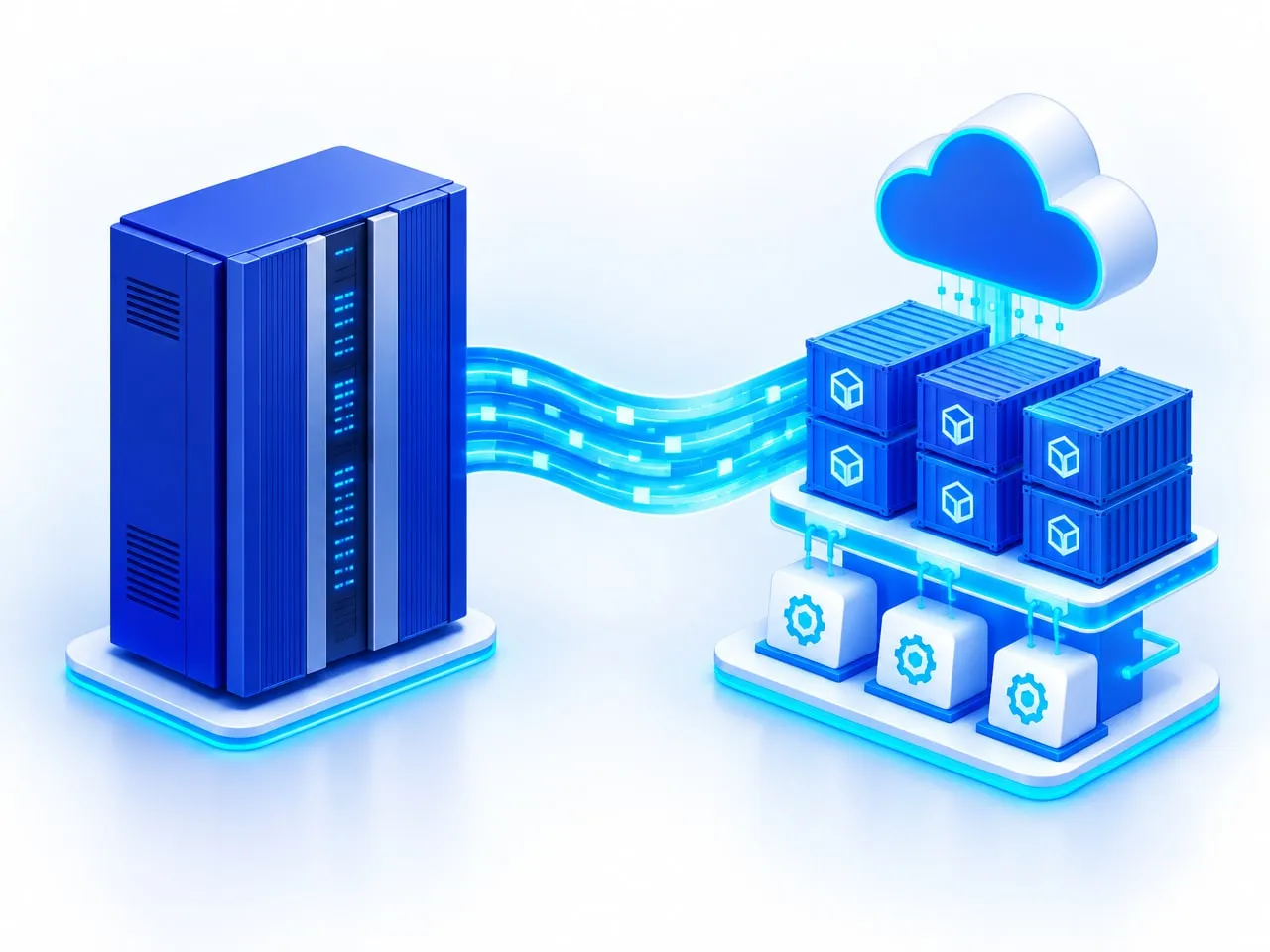
ASP.NET modernization is the incremental move of an application built on ASP.NET Web Forms, ASP.NET MVC or the .NET Framework onto Java with Spring Boot or Node.js, running in containers on AWS, Azure or Google Cloud, while the existing system keeps serving users until each part is replaced. MultiGenesys puts an API facade in front of the legacy application, rebuilds it route by route behind parity tests, and moves the data and the logins with a rollback path at every step.
Outcomes
What you get
Off a platform that limits you
Web Forms and the .NET Framework tie you to Windows servers and IIS. The rebuilt services run in Linux containers on the cloud you choose.
Business keeps running during the move
Users stay on the old application until each replaced route has passed parity tests. There is no single cutover weekend that the business depends on.
Risk you can see and stop
Every migrated route can be switched back to the legacy app with a routing change. You decide the pace, and you can pause between phases without stranded work.
A stack you can staff
Java, Spring Boot, Node.js and TypeScript have large hiring pools, current tooling and long support windows, so the system stops depending on a shrinking skill set.
What’s included
ASP.NET Modernization, end to end
Legacy application assessment
A review of pages, controllers, ViewState usage, stored procedures, scheduled jobs, IIS configuration and integrations, ending in a ranked migration plan with risks named.
API facade and strangler routing
A gateway or reverse proxy in front of the ASP.NET app decides which requests go to new services and which still go to legacy code, so routes move one at a time.
Rebuild in Spring Boot or Node.js
Business logic moved out of code-behind files and controllers into Spring Boot or Node.js services with documented REST APIs, plus React or Angular screens where the UI is replaced.
Data migration or coexistence
SQL Server to PostgreSQL with schema conversion, stored-procedure rewrites and reconciliation counts, or a decision to keep SQL Server and change only the application layer.
Parity testing
Recorded production requests replayed against old and new code, with response diffs, contract tests and side-by-side runs before any route is switched.
Authentication migration
Forms authentication, ASP.NET Membership and Windows authentication moved to OAuth2 and OpenID Connect, with sessions shared across old and new code during the transition.
Windows and IIS to containers
Docker images, Kubernetes or managed container services, CI/CD pipelines and infrastructure as code replace hand-configured Windows servers.
Decommissioning
When no traffic reaches the legacy app, we archive its data, remove the IIS hosts and hand over runbooks for the new estate.
Proof
Shipped and running in production
Industrial testing labs
Chemtech Labs (Zylon LIMS)
Enterprise laboratory platform digitizing testing labs end to end, with branded portals for global enterprise customers.
- 6 deployed services
- 4 white-label portals
Construction Tech
BricksLedger
A four-language digital khata for construction sites with real-time sync, branded statements and built-in subscriptions.
- 4 languages supported
- 116 REST endpoints
Process
How an ASP.NET Modernization engagement runs
Clear stages, working software at every step, and the same team from first workshop to production support.
- 01
Step 1
Assess and rank
We map the application, its database and its integrations, then rank modules by business value and migration risk so the first slice is a safe one.
- 02
Step 2
Put the facade in front
We place the routing layer in front of the ASP.NET app, add monitoring and capture real traffic for parity tests before any code moves.
- 03
Step 3
Migrate the first slice
We rebuild one module end to end, including its data and its auth, run it in shadow mode against production traffic and switch it over when results match.
- 04
Step 4
Repeat in planned phases
Each later module follows the same pattern as a fixed-scope phase, with release dates you can plan around and the option to pause between them.
- 05
Step 5
Retire IIS and Windows hosts
Once the last route has moved, we switch off the legacy app, archive what must be kept and hand over documentation and runbooks.
Why MultiGenesys for ASP.NET Modernization
Many ASP.NET applications still run core operations: order entry, claims, scheduling, internal portals. They work. The risk is that they sit on Windows servers and frameworks that new engineers do not want to learn, and every change touches code-behind files nobody fully understands. Rewriting from scratch looks clean on paper and usually fails in practice, because the old system holds rules that were never written down.
Our approach is the same incremental method we use for every legacy system. A facade goes in front, real traffic is captured, and each module is rebuilt in Spring Boot or Node.js, tested against the legacy behavior and switched over only when the results match. The old application stays live as the fallback until nothing routes to it.
This is a migration service. We move systems off ASP.NET; we do not take on new .NET development. The engineering habits behind it come from platforms we run in production: a multi-tenant laboratory platform with documented database tuning and self-hosted observability, and a construction-ledger platform that runs parallel v1 and v2 APIs so a live mobile app never breaks during change.
For the wider method see application modernization. If your core system runs on IBM i rather than Windows, our IBM i modernization service keeps RPG logic in place and adds APIs around it. If the application is sound and only the hosting needs to change, start with cloud migration.
Technologies we use
- Java 17 / 21
- Spring Boot 3
- Node.js / TypeScript
- React
- Angular
- OpenAPI
- OAuth2 / OpenID Connect
- PostgreSQL
- SQL Server
- Liquibase / Flyway
- Docker
- Kubernetes
- Terraform
- AWS / Microsoft Azure / Google Cloud
- Prometheus / Grafana
Engagement models
Work with us the way that suits you
Dedicated product team
A stable, cross-functional team — engineers, design, QA, DevOps — that owns your roadmap quarter after quarter.
Fixed-scope delivery
A defined build with milestones, demos and a hard definition of done.
Embedded engineers
Senior engineers inside your team, in your tools and your stand-ups, with no hand-over boundary.
Working standards
What you can expect on every project
Reviewed, version-controlled code
Every change goes through pull requests and peer review in your repository, with a clean history you own.
Automated testing in CI/CD
Unit, integration and API tests run in the pipeline on every change, so regressions are caught before release.
Security by default
Least-privilege access, secrets management, OWASP-aligned checks and environment separation from day one.
Production-ready by default
Idempotent APIs, audit trails, monitoring, alerting, backups and documented runbooks ship with every platform.
Frequently asked questions
Still unsure? Ask us directly — we reply within one business day.
What is ASP.NET modernization?
It is the move of an application built on ASP.NET Web Forms, ASP.NET MVC or the .NET Framework onto a current platform. Our service moves those systems to Java with Spring Boot or to Node.js, running in containers on AWS, Azure or Google Cloud, one module at a time while the old application keeps running.
Why not rewrite the whole application at once?
A big-bang rewrite freezes features for months, has to rediscover years of undocumented rules, and puts all of the risk on one cutover date. If the new system is late or wrong, the business has nothing to fall back on. Moving route by route behind a facade means value ships early, problems surface on small slices, and the old app stays as a working fallback.
Do we have to move off SQL Server?
No. Many programs keep SQL Server and change only the application layer, at least at first. Moving to PostgreSQL removes license costs and fits managed cloud databases well, but it adds schema conversion and stored-procedure rewrites, so we decide it per module based on cost and risk. Our data migration service covers the database move in detail.
How do you prove the new code behaves like the old code?
We capture real requests to the legacy app and replay them against both versions, comparing responses field by field. Contract tests, reconciliation counts on migrated data and a shadow-mode period on production traffic come before any route is switched over.
What happens to user logins during the migration?
Users should not have to log in twice or reset passwords. We introduce an OpenID Connect identity provider, bridge it to the existing forms or Windows authentication, and share session state across old and new code until the last legacy page is retired.
How much does ASP.NET modernization cost?
The main cost drivers are the number of pages and modules, how much logic sits in code-behind files and stored procedures, whether the database moves to PostgreSQL or stays on SQL Server, the number of integrations, existing test coverage and the target hosting. A fixed-scope assessment produces a phase-by-phase estimate before you commit to the full program.
Related services
Application Modernization
Move aging monoliths and outdated frameworks to Spring Boot, React and containers, one module at a time.
Cloud Migration
Move workloads to AWS, Azure or Google Cloud in planned waves, with Terraform landing zones and rehearsed cutovers.
Data Migration
Move data from legacy databases, spreadsheets and old CRMs into new systems, cleaned, deduplicated and reconciled.
System Integration
Connect CRM, ERP, accounting, payments and in-house apps with event-driven flows, replay and monitoring.
Tell us what you’re building. We’ll show you how we’d ship it.
Share a few lines about your project. A senior engineer — not a salesperson — replies within one business day.