
Vietnam e-invoicing
Vietnam E-Invoice Integration for ERP and Accounting Systems
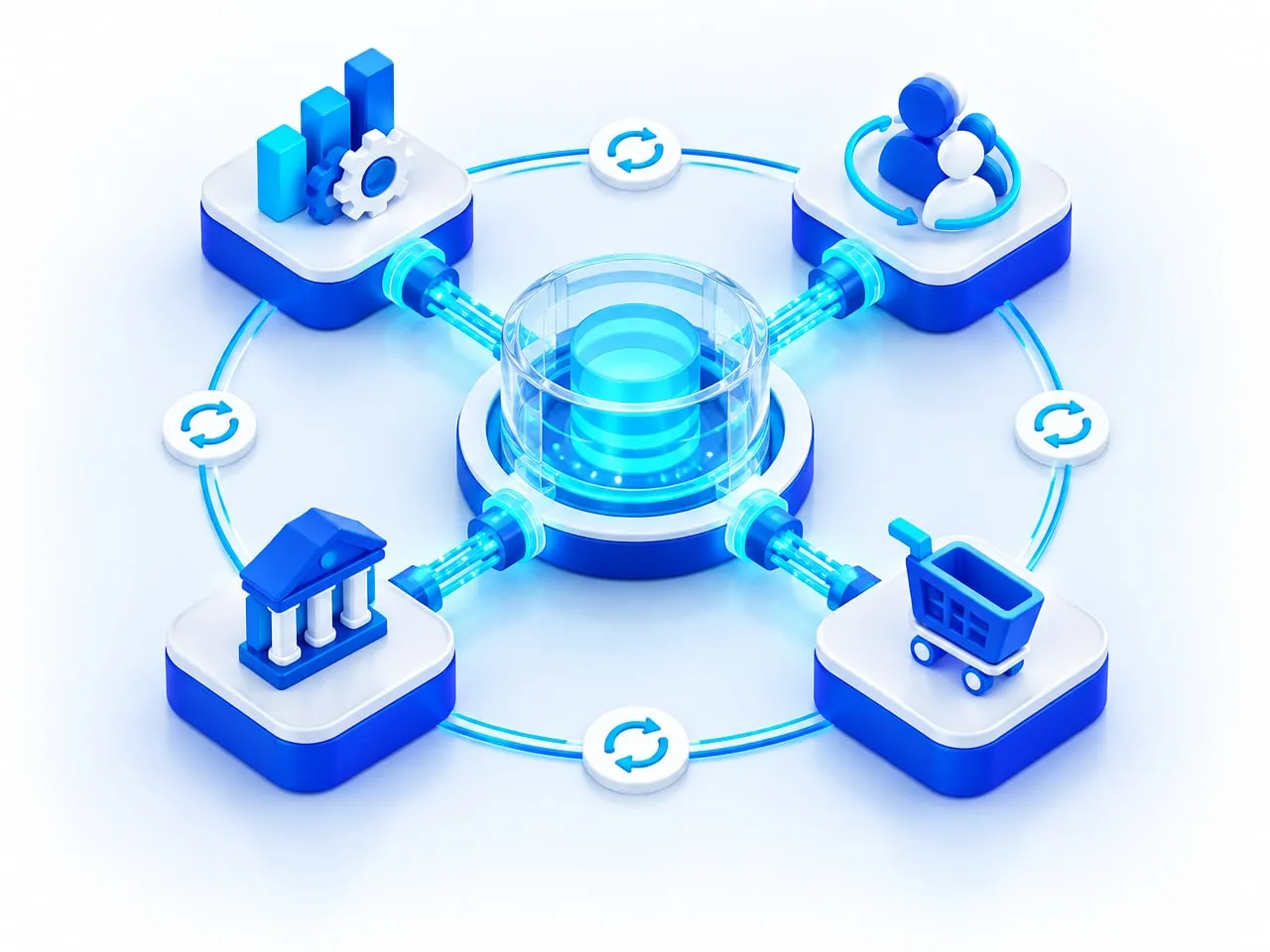
Vietnam e-invoice integration connects the system that raises your invoices to the tax authority's e-invoice platform, usually through a licensed T-VAN or e-invoice service provider, so each invoice is issued in the required XML format and, where the rules require it, receives a tax authority code before it reaches the buyer. MultiGenesys builds these integrations on demand and writes codes, status and adjustments back to your ERP.
Outcomes
What you get
Invoices issued from the ERP
Sales invoices are issued from the system where orders and deliveries live, not re-typed into a separate e-invoice portal.
Codes before the buyer sees it
For coded invoices, the tax authority code comes back to the ERP before the invoice is sent, so the buyer receives the valid version.
Corrections done the current way
Errors are handled with adjustment or replacement invoices as the current rules require, linked to the original in your ERP.
Books that match the tax data
What the tax authority holds and what your ledger reports are reconciled before each VAT declaration.
What’s included
Vietnam E-Invoicing Integration, end to end
Provider integration
A connector to the API of the T-VAN or e-invoice service provider you use, or to the tax authority directly where your business meets the conditions to connect.
XML invoice generation
E-invoices built in the XML format the tax authority publishes, with business data, digital signature and, for coded invoices, the tax authority code component.
Pre-issue validation
Checks for buyer tax codes, invoice templates and symbols, VAT rates and amounts, currency and mandatory fields before the invoice is sent.
Adjustments and replacements
Adjustment and replacement invoices generated from ERP credit notes and corrections, referencing the original invoice.
Cash-register and codeless flows
Support for invoices generated from cash registers or issued without a code where your sector qualifies, with data transmitted as required.
Status and audit trail
Codes, lookup details, status and every provider response stored against the ERP invoice, with failures explained.
Process
How a Vietnam E-Invoicing Integration engagement runs
Clear stages, working software at every step, and the same team from first workshop to production support.
- 01
Step 1
30-min scoping call
We review your ERP, entities, invoice volumes, B2B and B2C mix, and the T-VAN or e-invoice provider you use.
- 02
Step 2
Map and validate
We map ERP data to the XML invoice fields and run past invoices through validation to find master data gaps.
- 03
Step 3
Build and test
We build the connector and validation layer and test it in your provider's test environment with real invoice scenarios.
- 04
Step 4
Go live and support
We switch on entity by entity, monitor rejections, and update the integration as the Ministry of Finance changes the rules.
Why MultiGenesys for Vietnam E-Invoicing Integration
Vietnam has required e-invoices for most businesses since mid-2022 under Decree 123/2020/ND-CP. The rules have moved quickly since. Decree 70/2025/ND-CP amended the framework from 1 June 2025, with Circular 32/2025/TT-BTC as guidance. Then, from 1 July 2026, Decree 254/2026/ND-CP and Circular 91/2026/TT-BTC replaced Decree 123, Decree 70 and Circular 32. If your ERP integration was designed under the old rules, it needs a review.
Coded and codeless e-invoices
There are two main kinds of e-invoice:
- E-invoices with a tax authority code: the invoice is sent to the tax authority, which checks it and assigns a code before the seller sends it to the buyer. This is the general rule for businesses and household businesses.
- E-invoices without a code: allowed only for qualifying sellers, such as some businesses selling directly to consumers in listed sectors like electricity, telecommunications, banking, transport and retail, which must meet technical requirements and transmit invoice data to the tax authority.
Businesses selling directly to consumers may also use e-invoices generated from cash registers. The detailed conditions are set out in the decree and circular, so confirm which kind applies to you with your adviser.
What does the XML format look like?
Vietnam uses its own national XML format, not UBL or Peppol. An e-invoice has a business data component (seller, buyer, invoice template and symbol, lines, VAT and totals) and a digital signature component. Coded invoices also carry a component with the tax authority code. The tax authority publishes the data components and transmission methods, and under the 2026 framework the details are set by the Ministry of Finance rather than in the decree itself. We build to the current published specification and your provider’s API.
How do invoices reach the tax authority?
Most businesses connect through a T-VAN, a licensed e-invoice data transmission provider, or an e-invoice service provider that issues and transmits invoices for them. Large businesses that meet the conditions can connect directly. In each case your ERP has to produce correct data, receive the code or status back, and keep the two in step.
What we bring
We built FinAIQ, an accounting automation platform that validates financial records and posts them to SAP, NetSuite, QuickBooks, Xero, Zoho Books and Tally through queue-based connectors with full audit trails. Vietnam e-invoice work uses the same patterns: validation before issue, queued calls with retries, readable errors and a record of every invoice from ERP to code. Our accounting system integration page covers the ledger side.
Built on demand
This is scoped project work, not a packaged product. It starts with a 30-min call. A typical connector goes live in 2 to 3 weeks, depending on scope. For teams in Vietnam, see software development in Vietnam. For regional work, see Indonesia e-Faktur integration and MyInvois integration for Malaysia. For Peppol markets, see Peppol e-invoicing integration.
Need your ERP issuing Vietnamese e-invoices? Book a 30-min call.
MultiGenesys is not a T-VAN or licensed e-invoice service provider in Vietnam. This page is engineering guidance, not legal or tax advice.
Technologies we use
- Vietnam e-invoice XML format
- T-VAN and e-invoice provider APIs
- Digital signature (X.509)
- SAP, NetSuite and custom ERP integrations
- Java / Spring Boot
- Node.js / TypeScript
- AWS SQS / RabbitMQ
- PostgreSQL
Engagement models
Work with us the way that suits you
Dedicated product team
A stable, cross-functional team — engineers, design, QA, DevOps — that owns your roadmap quarter after quarter.
Fixed-scope delivery
A defined build with milestones, demos and a hard definition of done.
Embedded engineers
Senior engineers inside your team, in your tools and your stand-ups, with no hand-over boundary.
Working standards
What you can expect on every project
Reviewed, version-controlled code
Every change goes through pull requests and peer review in your repository, with a clean history you own.
Automated testing in CI/CD
Unit, integration and API tests run in the pipeline on every change, so regressions are caught before release.
Security by default
Least-privilege access, secrets management, OWASP-aligned checks and environment separation from day one.
Production-ready by default
Idempotent APIs, audit trails, monitoring, alerting, backups and documented runbooks ship with every platform.
Frequently asked questions
Still unsure? Ask us directly — we reply within one business day.
Which rules govern e-invoices in Vietnam now?
Decree 123/2020/ND-CP made e-invoices the standard, and Decree 70/2025/ND-CP amended it from 1 June 2025. From 1 July 2026, Decree 254/2026/ND-CP and Circular 91/2026/TT-BTC replaced that framework. Check the latest position with the tax authority or your adviser.
What is a coded e-invoice?
A coded e-invoice is one that receives a code from the tax authority before the seller sends it to the buyer. It is the general rule. Invoices without a code are allowed only for qualifying sellers, such as some businesses selling directly to consumers in listed sectors, which must transmit invoice data to the tax authority.
What is a T-VAN?
A T-VAN is a licensed provider of e-invoice data transmission services that connects businesses with the tax authority. Many businesses also use e-invoice service providers that issue invoices and handle transmission for them.
Is MultiGenesys a T-VAN?
No. MultiGenesys is not a T-VAN or licensed e-invoice service provider. We build the integration between your ERP and the T-VAN or provider you choose, or the tax authority directly where your business qualifies.
Can a wrong e-invoice still be cancelled?
Under the current rules, errors are generally corrected by issuing an adjustment or replacement invoice rather than cancelling the original as before. We build that flow into the ERP integration. Confirm the procedure for your case with your adviser.
How long does a Vietnam e-invoice integration take?
A typical connector goes live in 2 to 3 weeks, depending on scope. Entities, invoice types, the provider's API and master data quality drive the timeline.
Related services
Accounting System Integration
Connectors for Tally, Zoho Books, QuickBooks, Xero, SAP and NetSuite with GST-aware validation built in.
Tally Integration Services
TallyPrime connectors over XML, ODBC and TDL that sync masters and vouchers with GST fields and no duplicate postings.
Zoho Books and Tally Integration
Two-way sync or one-time migration between Zoho Books and TallyPrime, with ledgers, items and GST mapped correctly.
Salesforce Integration
Bi-directional, reconciled sync between Salesforce and your ERP, accounting, portals and legacy systems.
Tell us what you’re building. We’ll show you how we’d ship it.
Share a few lines about your project. A senior engineer — not a salesperson — replies within one business day.