
Industrial IoT (IIoT)
Industrial IoT Integration: Connect PLCs, SCADA and Sensors to the Cloud Safely
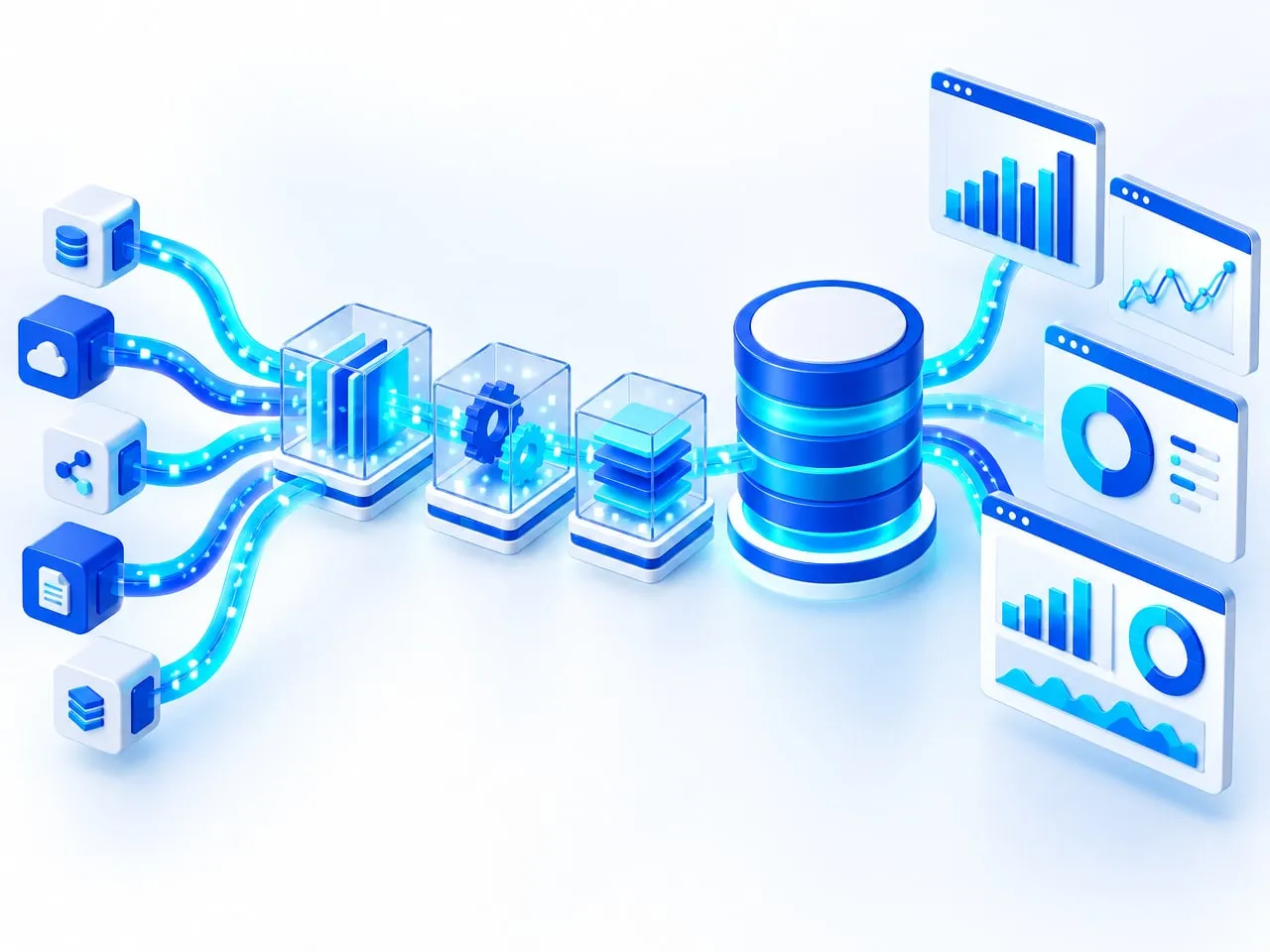
Industrial IoT (IIoT) integration is the engineering that gets data out of a working plant without disturbing it: reading PLCs, drives, meters and SCADA systems over industrial protocols, adding sensors where machines cannot report, and moving that data securely from the control network to the platforms where it is analyzed. It differs from consumer or product IoT. The devices are already installed, some are decades old, uptime matters more than anything else and OT security rules come first. MultiGenesys builds the edge gateways, protocol connectors, data model and cloud ingestion for brownfield and new plants, so the analytics that follow rest on data that is complete, labeled and trusted.
Outcomes
What you get
Every machine visible, old or new
Modern controllers, legacy PLCs, standalone meters and unconnected machines all feed one data layer, so no line is left out of plant reporting because it is older.
No disruption to production
Connections are read-only by default, poll rates are agreed with your automation team, and gateways sit outside the control loop, so the plant runs exactly as before.
Data with meaning attached
Tags arrive with consistent names, units and an asset hierarchy, instead of thousands of cryptic register addresses only one engineer understands.
A security model your OT team accepts
Outbound-only, encrypted connections through an industrial DMZ, designed around ISA/IEC 62443 zones and conduits and your site policies.
What’s included
Industrial IoT Integration, end to end
Connectivity assessment
A walk-through of controllers, networks, SCADA and historians: which protocols each machine speaks, which need retrofit sensors and where gateways should sit.
OPC UA connectivity
OPC UA clients built on Eclipse Milo, open62541 or asyncua, with certificate-based security, subscriptions instead of polling, and browsing of companion-specification information models where your machines expose them.
Modbus and legacy protocols
Modbus TCP and RTU polling with register maps documented per machine, scaling and byte-order handling, plus serial-to-Ethernet bridging for older equipment.
MQTT, Sparkplug B and a unified namespace
Broker design on Mosquitto or a managed service, Sparkplug B for device birth, death and state, and a unified namespace organized by site, area, line and machine.
Edge gateways and store-and-forward
Gateway software on industrial PCs or Raspberry Pi class hardware, using Node-RED, Telegraf or custom services, buffering data locally when the uplink fails.
Retrofit sensors for unconnected machines
Current clamps, vibration, temperature and counter sensors added to machines with no usable controller, wired to gateways by our embedded team.
Cloud ingestion and device management
Ingestion through Azure IoT Hub, AWS IoT Core or Apache Kafka, with gateway provisioning, certificates, configuration and remote updates managed centrally.
OT network and security design
Industrial DMZ placement, firewall rules, least-privilege accounts and audit logging designed with your OT and IT teams, aligned to ISA/IEC 62443 principles.
Process
How an Industrial IoT Integration engagement runs
Clear stages, working software at every step, and the same team from first workshop to production support.
- 01
Step 1
Survey the plant
We visit or remotely survey the lines with your automation engineers, list every controller and protocol and agree what may be read and how often.
- 02
Step 2
Design the data model
We agree tag naming, units, the asset hierarchy and the namespace structure before writing connectors, so every machine lands in the same shape.
- 03
Step 3
Connect one line
We install a gateway, connect one line end to end and check values against the HMI and SCADA screens with the operators.
- 04
Step 4
Harden and secure
We test network loss, gateway restarts and certificate rotation, and review the design with your OT security owner before scaling.
- 05
Step 5
Roll out and operate
We add lines and sites from templates, monitor gateway health and data completeness, and keep connectors current as machines change.
Why MultiGenesys for Industrial IoT Integration
Industrial IoT is where most analytics projects succeed or fail. If a gateway drops data every time the uplink blinks, or one line’s counters are scaled differently from the next, every dashboard built on top inherits the error. So we treat connectivity as engineering, not plumbing.
Our IoT development practice builds new connected products from firmware to app. This service is its industrial counterpart. It starts with your installed base: PLCs from several vendors and generations, drives, energy meters, SCADA servers and historians, many of them older than the network they now sit on. We read OPC UA where it exists, because subscriptions, data types and built-in security make it the cleanest option, and because Industrie 4.0 programs in Germany and across Europe have made it the expected interface on new machines. We poll Modbus where it does not, document register maps per machine and handle byte order, scaling and signed values so nobody has to rediscover them. Our embedded and firmware team adds retrofit sensors and gateway hardware where a machine has nothing to read. We have worked at the protocol level before: for a sports-technology company we built a venue controller that drives a machine over a framed binary serial protocol and reads its scoring sensors.
Above the edge we organize data into a consistent namespace, using MQTT with Sparkplug B so each device announces itself and its tags, and its state is always known. That gives the manufacturing data analytics layer clean, labeled, time-aligned data from day one, and lets new lines join from a template instead of a new project.
Security is designed in, not added. Gateways sit in an industrial DMZ, connections leave the plant outbound only, credentials are per gateway and rotated, and every change is logged. That is the conversation OT security owners in Australia, Singapore, the Gulf and Europe expect to have, and the one Indian plants are increasingly having as their networks open up. We work alongside your system integrator or automation team: they own the control logic, we own the data path.
Technologies we use
- OPC UA (Eclipse Milo, open62541, asyncua)
- Modbus TCP / RTU
- MQTT / Mosquitto
- Sparkplug B
- Node-RED
- Telegraf
- AVEVA PI System / AVEVA Historian
- Azure IoT Hub
- AWS IoT Core
- Apache Kafka
- InfluxDB
- TimescaleDB
- Raspberry Pi / industrial PCs
- ESP32
- Docker / K3s
- Grafana
Engagement models
Work with us the way that suits you
Dedicated product team
A stable, cross-functional team — engineers, design, QA, DevOps — that owns your roadmap quarter after quarter.
Fixed-scope delivery
A defined build with milestones, demos and a hard definition of done.
Embedded engineers
Senior engineers inside your team, in your tools and your stand-ups, with no hand-over boundary.
Working standards
What you can expect on every project
Reviewed, version-controlled code
Every change goes through pull requests and peer review in your repository, with a clean history you own.
Automated testing in CI/CD
Unit, integration and API tests run in the pipeline on every change, so regressions are caught before release.
Security by default
Least-privilege access, secrets management, OWASP-aligned checks and environment separation from day one.
Production-ready by default
Idempotent APIs, audit trails, monitoring, alerting, backups and documented runbooks ship with every platform.
Frequently asked questions
Still unsure? Ask us directly — we reply within one business day.
How is industrial IoT different from regular IoT development?
Industrial IoT starts with equipment that already exists and must keep running. The work is mostly protocols such as OPC UA and Modbus, safe read-only access to controllers, OT network security and data modeling, rather than designing a new connected product. For new connected devices, see our IoT development service.
Can you connect older machines that have no network interface?
Yes, in most cases. If the PLC has a serial port we can often read it over Modbus RTU or the vendor's protocol through a gateway. If there is no usable controller, retrofit sensors such as current clamps, cycle counters, vibration and temperature sensors give you run state, counts and condition data without touching the machine's control logic.
Will connecting to our PLCs affect production?
It should not, and we design for that. Connections are read-only by default, poll rates and subscription intervals are agreed with your automation team, and gateways run outside the control loop. We test on one line, with your engineers watching, before scaling.
What is a unified namespace and do we need one?
A unified namespace is a single, structured place, usually an MQTT broker organized by site, area, line and machine, where every system publishes its current state and every consumer subscribes. It helps once you have several sources and several consumers. For a single-line pilot, a simpler direct pipeline is often enough, and we design it so a namespace can be added later.
How do you handle OT security?
We follow ISA/IEC 62443 principles: the control network is a separate zone, data crosses to IT and cloud only through defined conduits in an industrial DMZ, connections are outbound and encrypted with certificates, and cloud services cannot write to controllers by default. We work within your site's security policies and do not claim a 62443 certification.
Which cloud should our IIoT data go to?
Usually the one your company already runs. Azure IoT Hub and AWS IoT Core both handle device identity and ingestion well, and Apache Kafka suits teams that want a cloud-neutral backbone or on-premises deployment. Data-residency rules in places such as Germany, the Gulf or India may point to a specific region or a self-hosted stack.
Related services
Manufacturing Data Analytics
Turn PLC, SCADA, historian and sensor data into OEE, downtime analysis, alerts and decisions, starting with one line.
OEE and Production Monitoring
Automatic OEE from machine signals: availability, performance and quality by line, shift and product, with loss analysis.
Predictive Maintenance
Vibration, temperature and current monitoring, anomaly detection and remaining-useful-life models tied to maintenance work.
Quality Analytics and Vision Inspection
SPC on live process data, defect root-cause analysis across machines and batches, and computer-vision inspection.
Tell us what you’re building. We’ll show you how we’d ship it.
Share a few lines about your project. A senior engineer — not a salesperson — replies within one business day.