
MES and ERP Integration
MES and ERP Integration That Connects the Shop Floor to SAP, Oracle, TallyPrime and Zoho
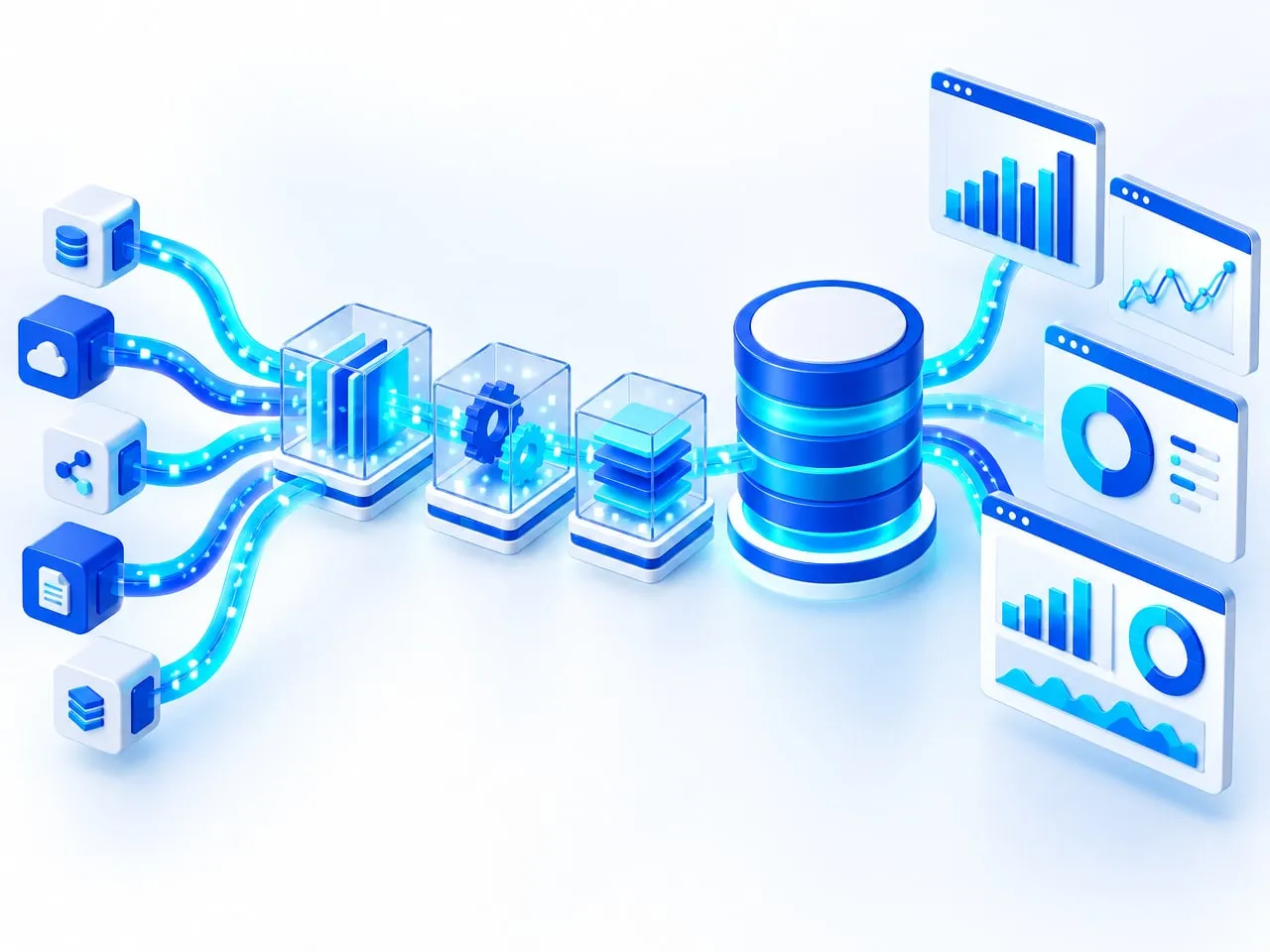
MES and ERP integration connects the systems that plan and account for production with the systems and machines that carry it out. Production orders, bills of material and routings flow down to the floor. Actual quantities, material consumption, scrap, machine time and OEE flow back up, so inventory, costing and planning reflect what really happened rather than what was planned. MultiGenesys builds these links for SAP, Oracle, TallyPrime and Zoho, with or without an MES in between, following ISA-95 patterns for what crosses between Level 3 and Level 4 and an event-driven design that never loses a production confirmation.
Outcomes
What you get
No more re-keying production data
Quantities, consumption and scrap reach the ERP from machines and shop-floor screens, not from a supervisor typing a sheet into a terminal at the end of the shift.
Inventory and costing that match reality
Actual material consumption and scrap update stock and product cost promptly, so planners and finance stop working from standard values.
Planners who see the floor
Order progress, machine availability and OEE are visible in planning tools, so schedules can be adjusted before a delivery date slips.
Every confirmation accounted for
Queued, idempotent messages with retries and reconciliation mean nothing is lost or posted twice when a network link or ERP is slow.
What’s included
MES and ERP Integration, end to end
Integration design on ISA-95 lines
A clear split of what the ERP owns and what the shop floor owns, with message contracts for orders, confirmations, consumption, quality results and equipment status.
Production order download
Orders, BOMs, routings and specifications sent from the ERP to the MES, line screens or machine recipes, with changes and cancellations handled.
Production confirmations and goods movements
Good and scrap quantities, labor and machine time and material consumption posted back as ERP confirmations and goods movements, by order and operation.
SAP and Oracle connectivity
SAP S/4HANA and ECC through OData APIs, BAPIs and IDocs, and Oracle Cloud and E-Business Suite through REST APIs and integration tables, using the interfaces your ERP team approves.
TallyPrime and Zoho for growing manufacturers
Stock journals, manufacturing vouchers and inventory updates in TallyPrime, and items, stock and orders in Zoho Inventory and Zoho Books, for plants that run lighter ERPs.
OEE and performance data to ERP and BI
OEE, downtime and energy data summarized by order, line and period and written to the ERP, a planning tool or the data warehouse for costing and reporting.
Lightweight shop-floor applications
Where there is no MES, simple web or tablet screens for order start and stop, quantities, scrap reasons and material scanning, built to fill the gap without a full MES project.
Monitoring, replay and reconciliation
A dashboard of every message, failed postings held for correction and replay, and scheduled reconciliation between shop-floor totals and ERP postings.
Process
How an MES and ERP Integration engagement runs
Clear stages, working software at every step, and the same team from first workshop to production support.
- 01
Step 1
Map the flows
We document how orders, confirmations, materials and quality results move today, who keys what, and where numbers disagree.
- 02
Step 2
Agree the contracts
With your ERP and production teams we agree which system owns each piece of data, message formats and posting rules.
- 03
Step 3
Build one flow end to end
We usually start with production confirmations for one line, tested in your ERP sandbox with real orders.
- 04
Step 4
Go live flow by flow
Each flow goes live with monitoring and reconciliation, running in parallel with manual entry until totals match.
- 05
Step 5
Extend and operate
We add order download, consumption, quality and OEE flows, more lines and sites, and support the integration in production.
Why MultiGenesys for MES and ERP Integration
In many plants the ERP and the shop floor meet at a spreadsheet. A supervisor prints the production orders, the floor writes actual quantities and scrap on paper, and someone keys it into SAP, Oracle or TallyPrime the next morning. Inventory is a day behind, product cost runs on standard values, and nobody can say whether an order will make its delivery date until it is late.
We replace that hand-off with an integration designed on ISA-95 lines. The ERP keeps what it is good at: orders, materials, costing and finance. The shop floor, whether an MES, line screens or machines, keeps execution. A message layer between them carries production orders down and confirmations, consumption, scrap and quality results back up, with each message keyed, queued and reconciled. Machine data from our industrial IoT integration and OEE monitoring work supplies actual counts and times automatically, so confirmations come from the machines rather than from memory.
This builds on our wider integration practice. Our accounting system integration work connects 15+ accounting and ERP systems, with typical connector go-live in 2 to 3 weeks for standard accounting flows. Our TallyPrime integration and Zoho consulting teams know those platforms’ data models well, which matters for Indian manufacturers whose plants run on them. For larger estates, our system integration practice provides the event-driven architecture, replay and monitoring behind every flow.
We have also built the business layer around a technical operation before. Zylon, the laboratory platform we built for Chemtech Labs, runs CRM with quotations, finance with sales orders and receivables, and quality management with QC check plans on the same data platform as the lab workflow, for enterprise customers in lubricants, oil and gas, and HVAC. Production integration needs the same discipline: one source of truth per record, audit history on every change and nothing posted twice.
We work with manufacturers in Pune and across India, and with plants and groups in Germany and Europe, the Gulf, Singapore, Australia and Canada whose ERP teams need a partner that understands both the shop floor and the ledger. See the manufacturing industry overview for the full set of services.
Technologies we use
- ISA-95 / B2MML
- SAP S/4HANA (OData, BAPI, IDoc)
- Oracle Cloud / E-Business Suite
- TallyPrime
- Zoho Inventory / Zoho Books
- OPC UA / MQTT
- Apache Kafka
- RabbitMQ
- Java / Spring Boot
- Node.js
- PostgreSQL
- React / Angular
- Power BI
- Docker / Kubernetes
Engagement models
Work with us the way that suits you
Dedicated product team
A stable, cross-functional team — engineers, design, QA, DevOps — that owns your roadmap quarter after quarter.
Fixed-scope delivery
A defined build with milestones, demos and a hard definition of done.
Embedded engineers
Senior engineers inside your team, in your tools and your stand-ups, with no hand-over boundary.
Working standards
What you can expect on every project
Reviewed, version-controlled code
Every change goes through pull requests and peer review in your repository, with a clean history you own.
Automated testing in CI/CD
Unit, integration and API tests run in the pipeline on every change, so regressions are caught before release.
Security by default
Least-privilege access, secrets management, OWASP-aligned checks and environment separation from day one.
Production-ready by default
Idempotent APIs, audit trails, monitoring, alerting, backups and documented runbooks ship with every platform.
Frequently asked questions
Still unsure? Ask us directly — we reply within one business day.
What is the difference between MES and ERP?
An ERP plans and accounts for the business: orders, inventory, purchasing, costing and finance, usually by day or shift. An MES manages execution on the shop floor: which order runs on which machine, what was produced, what was consumed and what quality checks were done, in minutes or seconds. In ISA-95 terms, ERP is Level 4 and MES is Level 3.
Do we need an MES before integrating the shop floor with our ERP?
No. Many plants connect machines and simple shop-floor screens directly to the ERP through an integration layer, which covers order download, confirmations and scrap without a full MES. If your needs grow to detailed scheduling, genealogy or electronic batch records, an MES can be added later and plugged into the same integration.
Which ERP systems do you integrate with?
This service is built around SAP S/4HANA and ECC, Oracle Cloud and E-Business Suite, TallyPrime, and Zoho Inventory and Books, and we connect other ERPs through their APIs. Our wider accounting and ERP practice covers 15+ connectors, with typical connector go-live in 2 to 3 weeks for standard accounting flows. Shop-floor integrations are scoped after mapping, because each plant's flows differ.
How do you stop production postings being lost or duplicated?
Every confirmation is a message with a unique key, sent through a queue. If the ERP is slow or offline, messages wait and retry. If a message is resent, the key stops it being posted twice. Scheduled reconciliation compares shop-floor totals with ERP postings and flags any difference for review.
Can OEE and downtime data go back into SAP or our ERP?
Yes. We summarize OEE, downtime and machine time by order, operation or period and write them to the ERP where it has a place for them, such as activity confirmations or plant-maintenance notifications, or to the data warehouse that feeds costing and management reports.
We run TallyPrime or Zoho. Is shop-floor integration still worth it?
Often yes, especially for growing manufacturers in India where production is still keyed in by hand. Posting stock journals or manufacturing vouchers in TallyPrime, or inventory movements in Zoho, from actual production counts removes a daily data-entry job and keeps stock figures honest.
Related services
Manufacturing Data Analytics
Turn PLC, SCADA, historian and sensor data into OEE, downtime analysis, alerts and decisions, starting with one line.
Industrial IoT Integration
OPC UA, Modbus and Sparkplug B edge gateways, unified namespace and secure OT-to-cloud ingestion for brownfield plants.
OEE and Production Monitoring
Automatic OEE from machine signals: availability, performance and quality by line, shift and product, with loss analysis.
Predictive Maintenance
Vibration, temperature and current monitoring, anomaly detection and remaining-useful-life models tied to maintenance work.
Tell us what you’re building. We’ll show you how we’d ship it.
Share a few lines about your project. A senior engineer — not a salesperson — replies within one business day.